LATEST

Monday, January 6, 2020

January 06, 2020

தாவரவியல்- மரபும் பரிணாமமும் ஒரு வரி வினாக்கள் ( TNPSC & IAS)

தாவரவியல்- மரபும் பரிணாமமும்  

ஒரு வரி வினாக்கள் ( TNPSC & IAS)


1. மெண்டல் தோட்டப்பட்டாணி (பைசம் சட்டைவம்) செடியில் 7வகையான மாற்று உருவ வேறுபாடுகளைக் கண்டறிந்தார். கீழுள்ளவற்றில் ஒருவகை வேறுபாடு மாறியுள்ளது________

i) நெட்டை மற்றும் குட்டை

ii) விதையின் நிறம் மஞ்சள் மற்றும் பச்சை

iii) நுனி மலர் மற்றும் கோண மலர்

iv) மென்மையான தண்டு மற்றும் கடினமான தண்டு

2. ஆதிமனிதன் தோன்றியது________

i)ஆப்பிரிக்கா

ii) அமெரிக்கா

iii) ஆஸ்திரேலியா

iv) இந்தியா

3. கீழுள்ளவற்றுள் பாரம்பரிய தன்மை கொண்டது________
i) மரபணு மாற்றம் செய்யப்பட்ட விந்தணு

ii) கல்லீரலில் மரபணு மாற்றம் செய்யப்பட்ட ஜீன்கள்

iii) தோல் செல்லில் மரபணு மாற்றம் செய்யப்பட்டவை

iv) பால்மடிச் செல்லில் மரபணு மாற்றம் செய்யப்பட்டவை

4. இயற்கைத் தேர்வுக் கோட்பாட்டை வெளியிட்டவர்________

i) சார்லஸ் டார்வின்

ii) ஹியூகோ-டீ-விரிஸ்

iii) கிரிகர் ஜோகன்மெண்டல்

iv) ஜீன் பாப்டைஸ் லமார்க்

5. உடற்செல் ஜீன் சிகிச்சை என்பது________

i) விந்து செல்லில் மாற்றத்தை ஏற்படுத்துகிறது

ii) தலைமுறையில் மாற்றத்தை ஏற்படுத்துகிறது

iii) உடற்செல்லில் மாற்றத்தை ஏற்படுத்துகிறது

iv) அண்டச்செல்லில் மாற்றத்தை ஏற்படுத்துகிறது

6. பட்டாணிச்செடியின் மஞ்சள் விதையின் பண்பானது,பச்சை நிற விதையின் மேல் ஓங்குதன்மை கொண்டது. கீழுள்ளவற்றுள் பச்சை நிற விதைக்கான ஜீனாக்கம் ________

i) GG

ii) Gg

iii) Yy

iv) yy

7. சில மனிதர்களில் நாவினை உருளச்செய்யும் ஓங்குபண்பானது உடல குரோமோசோம்களால் கட்டுப்படுத்தப்படுகிறது.

(நாவினை உருளச்செய்பவர் = RR/Rr, நாவினை உருளச் செய்ய இயலாதவர் = rr) நாவினை உருளச்செய்யும் குழந்தைக்குஇநாவினை உருளச்செய்யாத ஒரு சகோதரனும் இநாவினை உருளச்செய்யும் இரு சகோதரிகளும் உள்ளனர்.இவர்களின் பெற்றோர்கள் இருவருமே நாவினை உருளச்செய்பவர்கள் எனில் இகீழ்க்கண்டவற்றில் பெற்றோர்களின் மரபணுவாக்கம் ________

i) RR X RR

ii) Rr X Rr

iii) RR X Rr

iv) rr X rr

8. தொகுதி நிடேரியாவைச் சேர்ந்த பலசெல் உயிரியான ஹைட்ராவில் பலவகையான இனப்பெருக்க முறை உள்ளது.

கீழுள்ளவற்றில் புதிய சந்ததி குறிப்பிடும்படியான வேறுபாடுகளுடன் உருவாக்கப்படும் முறை________

i) மொட்டு விடுதல்

ii) இழப்புமீட்டல்

iii) பால் இனப்பெருக்கம்

iv) பாலிலா இனப்பெருக்கம்

9. முதல் குளோனிங் விலங்கான செம்மறி ஆடு டாலி உருவாக்கத்தின் நிகழ்வுகள்

அ) அண்ட செல்லிலிருந்து ஒற்றைமய உட்கரு நீக்கம்

ஆ) இரட்டை மய உட்கரு கொண்ட அண்ட செல்லை வளர்ப்புத்தாயின் கருப்பையில் பதித்தல்

இ) செம்மறிஆட்டின் பால்மடி செல்களைச் சேகரித்தல்.

ஈ) உட்கரு நீக்கப்பட்ட அண்ட செல்லினுள் பால்மடி செல்லின் இரட்டைமய உட்கருவை செலுத்துதல்.

உ) இளம் குளோன் உருவாகுதல்.

மேற்கண்ட நிகழ்வுகளின் சரியான வரிசை அமைப்பு________

i) அ,ஆ,இ,ஈ,உ

ii) இ,அ,ஆ,உ,ஈ

iii)இ,அ,ஈ,ஆ,உ

iv) உ,ஈ,இ,ஆ,அ

10. கீழ்க்காண்பவை ஸ்டெம்செல்கள் (மூலசெல்கள்)

பற்றிய கூற்றுகள்

அ) இவைகள் சிறப்படையாதஃமாறுபாடடையாத செல்கள்

ஆ) இவைகள் உடலின் எந்தவகையான செல்களாகவும் மாறும் திறன் கொண்டவை.

இ) இவை வேகமாகப் பெருக்கமடைந்து ஒரே மாதிரியான அதிக எண்ணிக்கையில் செல்களை உருவாக்குகின்றன.

ஈ) இவைகள் இதய செல்களாகவோ அல்லது நரம்பு செல்களாகவோ மாற்றமடையாது.

உ) இவைகள் இனப்பெருக்கத்தின் வாயிலாகாத் தோன்றும் தலைமுறைகளிலிருந்து பெறப்படுகிறது.

சரியான கூற்று________

i) அ ஆ இ

ii) இ ஈ உ

iii) அ இ உ

iv) ஆ இ ஈ

Sunday, January 5, 2020

January 05, 2020

Botany - Respiration in Plants

BOTANY - RESPIRATION IN PLANTS

Magme-Guru

RESPIRATION

•    All living organisms, including plants, receive their energy required for their survival from a chain of chemical reactions called respiration.

•    Respiration is a biochemical process, which is defined as the movement of air between the external environment and the cell, tissues of a living species.

•    In this process, oxygen gas is inhaled in and carbon dioxide gas is exhaled out. It is referred to as a metabolic process, as an organism obtains energy by oxidizing nutrients and releasing waste products.
Note : Also, refer to Respiration – A Life Process

•    Plants do require oxygen for respiration which in return give out carbon dioxide. Unlike animals and humans, plants do not have any specialized structures for gaseous exchange but they have stomata (present in leaves) and lenticels (present in stems) which are involved in the exchange of gases.

•    Compared to animals and humans, plant roots, stems, and leaves respire at a very lower rate.

•    It is important to note here that respiration is not equal to breathing. Breathing is just a part of respiration that takes place in both humans and animals.

•    Plants respire throughout its lifespan as the plant cell require energy for their survival, but plants do not breathe as humans and animals do.  They breathe through the process called Cellular respiration.

•    In this process of cellular respiration, plants produce glucose molecules through photosynthesis process by capturing the solar energy and converting it into glucose.

•    There are many live experiments to prove that plants do breath. All plants do respire to provide energy for their cells to stay active or alive.

THE PROCESS OF RESPIRATION IN PLANTS

During respiration, very little amount of gas exchanges takes place within the different parts of the plants. Therefore, each part takes care of its own energy requirements.

Roots, stems, and leaves of plants exchange gases for respiration separately. As we all know, leaves have tiny pores called stomata, which is used for the exchange of gases.

The oxygen, taken in through stomata is used by cells in the leaves to break down glucose into carbon dioxide and water.

Respiration In Roots

•    Roots, the underground part of the plants absorb air from the air spaces present between the soil particles.
•    Thus, the oxygen absorbed through roots are used to release energy which is later utilized for the transportation of minerals and salts from the soil.
•    We are aware of the fact that plants have the unique ability to photosynthesize. Photosynthesis is the process by which plants prepare their own food. 

•    It takes place only in the parts of plants that contain chlorophyll, i.e. only in the green parts of the plants.
•    The process of photosynthesis is so prominent that it sometimes masks the process of respiration in plants.
•    However, we must know that respiration in plants occurs throughout the day while photosynthesis process takes place only in the presence of light.
•    Therefore, at night the respiration in plants becomes prominent.
•    That is why we often hear that people are asked not to sleep under a tree at night.
•    This may cause suffocation due to the excessive presence of carbon dioxide released by trees as a result of respiration.

Respiration In Stems

•    In the case of the stem, the air gets diffused in the stomata and passes through various parts of the cell for respiration.
•    The carbon dioxide produced during this stage also diffuses through the stomata. In higher plants or woody plants, the gaseous exchange is carried out by lenticels.

Respiration In Leaves


•    Leaves comprise of tiny pores referred to as stomata.
•    The exchange of gases takes place via stomata through the process of diffusion.
•    Each stoma is controlled by Guard Cells. The opening and closing of the stoma help in the exchange of gases between the atmosphere and the interior of Leaves.
 
Differences between Respiration and Photosynthesis

Photosynthesis 
This process is common to all green plants containing chlorophyll pigments.
It synthesizes foods.
It stores energy.
Photosynthesis is an anabolic process.
It requires cytochrome.
It is Endothermal process.
It is comprised of products like sugar, oxygen, and water as products.
During Photosynthesis, radiant energy is converted into potential energy.
It takes place only in the presence of sunlight.

Respiration
This process is common to all living things including plants, animals, birds, etc.
It oxidizes foods.
It releases energy.
Respiration is a catabolic process.
It also requires cytochrome.
It is Exothermal process.
It is comprised of products like hydrogen and carbon-dioxide.
During Respiration, potential energy is converted into kinetic energy.
It takes place continuously throughout the life process from birth to death.

TYPES OF RESPIRATION
There are two main types of respiration. 
•    Aerobic Respiration
•    Anaerobic Respiration

Aerobic Respiration
•    This type of respiration occurs within the mitochondria of all eukaryotic organisms.
•    In this process, food molecules are completely oxidized into the water, carbon dioxide and energy is released in the presence of oxygen.
•    All higher organisms respire aerobically and this process requires atmospheric oxygen. 

Anaerobic Respiration

•    This type of respiration occurs within the cytoplasm of prokaryotic organisms like bacteria and yeast.
•    In this process, less energy is released due to the incomplete oxidation of food in the absence of oxygen.
•    Carbon dioxide and Ethyl alcohol are produced during anaerobic respiration.

January 05, 2020

Botany - Nutrition & Dietetics - (UPSC,TNPSC,TRB Imporatant Notes)

BOTANY - NUTRITION & DIETETICS

- (UPSC,TNPSC,TRB Imporatant Notes)

Magme-guru

NUTRITION
•    It is the process to intake different nutrients (Carbohydrates, Proteins, Vitamins, Minerals etc.) to maintain different life process such as growth, repair etc. Nutrients are the source of energy for different metabolic (energy-giving) processes.

PLANT NUTRITION

Plant nutrition is a study of the elements and compounds that are necessary for its growth. There are mainly two types of nutrition in plants.
•    Autotrophic
•    Heterotrophic

1.    AUTOTROPHIC

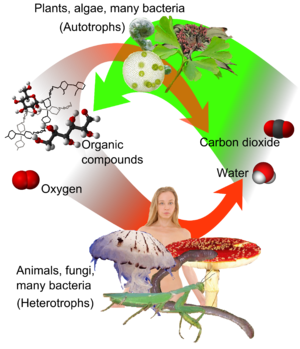
•    Autotrophs are organisms that can synthesize (make internally) their own food.
•    Examples of autotrophs are most species of plants and unicellular organisms.
•    Autotrophic plans are those that make their own food through a process called photosynthesis.
•    In photosynthesis, plants possessing chlorophyll (the cells that give leaves their green colour) synthesize simple sugar (glucose).
•    They do it using water and CO2 and in the presence of sunlight.
•    There are some autotrophic plans conducting photosynthesis through chlorophyll though they do not appear green in colour.


2.    HETEROTROPHIC
•    Heterotrophs are organisms that are dependent on others for their food.
•    Some examples of heterotrophs are fungi, bacteria etc. Some plants are also heterotrophs.
•    They survive by consuming animals, dead things and nutrients from other plants. E.g. Venus Flytraps, Pitcher Plants, Rafflesia and other parasitic plants.
 

ANIMAL NUTRITION
1.    HOLOZOIC
•    Such an animal will engulf, digest and absorb the food itself. These animals are divided into 3 types:
I.    Herbivores: Animals that eat plants only (e.g. Cow, Goat etc.)
II.   Carnivores: Animals that eat other animals (e.g. Tiger, Viper, Spiders etc.)
III.  Omnivores: Animals that eat both animals and plants (e.g. Human Beings, Ants etc.)

2.    PARASITES
•    Parasites live on or inside other living organisms. In this type, one animal is dependent on other animals for nutrition. The animal that is dependent is called parasite and on whom it is dependent is called host.
 

3.    SAPROZOIC
•    Animal that extracts its food from the rotten substances. Example is insects that survive on dirty drainage etc.

NUTRIENTS ABSORBED BY ANIMALS

1.    Carbohydrates
•    They are the organic compounds in which C, H, O are often present in 1:2:1 ratio.
Functions:
•    Provide energy especially for the brain.
•    Regulation of blood glucose.
•    Breaking down fatty acid.
•    Dietary fibre etc.
Sources: Wheat, rice, potato, plants etc. Mainly present in the form of sugar, starch and cellulose.

2.    Proteins
•    These are the nitrogenous substances which are called building blocks of the body. One or more long chains of amino acids form proteins. Nitrogen along with C, H, and O are present in proteins.
Functions:
•    Essential for formation and growth of cells & tissues etc.
•    Vital in the maintenance of body tissue, including development and repair.
•    Provide energy to the body.
•    Acts as enzyme.
•    Helps in developing genetic characteristics.
Sources: Meat, fish, eggs, beans, yogurt, lentils, soy etc.
Diseases:
•    Kwashiorkor: Caused by deficiency of proteins in diets with calories mostly from carbohydrate
sources like rice and bananas. Children develop thin arms and legs with swollen stomach. They have stunted growth, diarrhoea, fatigue etc.
•    Marasmus: Caused by severe deficiency of proteins and calories in infants. Muscle tissue and
water content reduced. Causes starvation.

3.    Fats:
•    Saturated esters of glycerol and fatty acids.
Functions:
•    Provide energy.
•    Protects organs from injuries.
•    Protects skin from losing heat.
Sources: Animal fats are saturated in nature and found in milk, meat, cheese, butter etc. They are also found extensively in red meat. Vegetable fats are trans-saturated and their sources are nut, coconut, mustard, almond etc.
Diseases: Over consumption and excessive presence of fat can cause heart disease and high blood pressure.

4.    Vitamin   
•    Vitamins are vital amino acids. These organic compounds are required in very small quantities for our body. There are two types of vitamin based on their solubility:
A. Soluble in water: Vitamins B and C
B. Soluble in fat: Vitamins A, D, E and K

5.    Water:
•    It is the most essential component of our body. Around 70% weight of our body is water. It controls the body temperature, regulates biochemical reactions etc.

6.    Minerals:
•    Minerals are homogeneous inorganic materials which controls the metabolism of our body. Below are some important minerals and their functions:
January 05, 2020

Botany - The Cell - Part 3 - (UPSC,TNPSC,TRB Imporatant Notes)

BOTANY - THE CELL

PART 3

- (UPSC,TNPSC,TRB Imporatant Notes)

Magme-guru

NUCLEOID
•    In some organisms like bacteria, the nuclear region of the cell may be poorly defined due to the absence of a nuclear membrane. Such an undefined nuclear region containing only nucleic acids is called a Nucleoid.

VACUOLES
•    Empty structure in the cytoplasm is called vacuole. It could be single and big as in an onion cell (plant cell). Cheek cells (animal cells) have smaller vacuoles.
•    Large vacuoles are common in plant cells. Vacuoles in animal cells are much smaller.
•    Vacuoles are storage sacs for solid or liquid contents.
•    The central vacuole of some plant cells may occupy 50-90% of the cell volume.
•    In plant cells vacuoles are full of cell sap and provide turgidity [swollen and distended or congested] and rigidity to the cell.
•    Many substances of importance in the life of the plant cell are stored in vacuoles. These include amino acids, sugars, various organic acids and some proteins.
•    In single-celled organisms like amoeba, the food vacuole contains the food items that the amoeba has consumed.
•    In some unicellular organisms, specialized vacuoles also play important roles in expelling excess water and some wastes from the cell
ENDOPLASMIC RETICULUM (ER)
•    The endoplasmic reticulum (ER) is a large network of membrane-bound tubes and sheets. It looks like long tubules or round or long bags (vesicles).
•    The ER membrane is similar in structure to the plasma membrane.
•    There are two types of ER –– rough endoplasmic reticulum (RER) and smooth endoplasmic reticulum (SER).

1.    Rough Endoplasmic Reticulum RER – Ribosomes

•    RER looks rough under a microscope because it has particles called ribosomes attached to its surface.
•    The ribosomes, which are present in all active cells, are the sites of protein manufacture.
•    The manufactured proteins are then sent to various places in the cell depending on need, using the ER.
 
2.    Smooth Endoplasmic Reticulum SER
•    The SER helps in the manufacture of fat molecules, or lipids, important for cell function.
 
3.    Functions of Endoplasmic Reticulum (ER)
•    Some of these proteins and lipids help in building the cell membrane. This process is known as membrane biogenesis.
•    Some other proteins and lipids function as enzymes and hormones.
•    Although the ER varies greatly in appearance in different cells, it always forms a network system.
•    Thus, one function of the ER is to serve as channels for the transport of materials (especially proteins) between various regions of the cytoplasm or between the cytoplasm and the nucleus.
•    The ER also functions as a cytoplasmic framework providing a surface for some of the biochemical activities of the cell.
•    In the liver cells of the group of animals called vertebrates, SER plays a crucial role in detoxifying many poisons and drugs.

GOLGI APPARATUS OR GOLGI COMPLEX
•    The golgi apparatus consists of a system of membrane-bound vesicles arranged approximately parallel to each other in stacks called cisterns.
•    These membranes often have connections with the membranes of ER and therefore constitute another portion of a complex cellular membrane system.
•    The material synthesized near the ER is packaged and dispatched to various targets inside and outside the cell through the golgi apparatus.
•    Its functions include the storage, modification and packaging of products in vesicles.
•    In some cases, complex sugars may be made from simple sugars in the golgi apparatus.
•    The golgi apparatus is also involved in the formation of lysosomes.

1.   Lysosomes
•    Lysosomes are a kind of waste disposal system of the cell.
•    Lysosomes help to keep the cell clean by digesting any foreign material as well as worn-out cell organelles.
•    Foreign materials entering the cell, such as bacteria or food, as well as old organelles end up in the lysosomes, which break them up into small pieces. Lysosomes are able to do this because they contain powerful digestive enzymes capable of breaking down all organic material.
•    During the disturbance in cellular metabolism, for example, when the cell gets damaged, lysosomes may burst and the enzymes digest their own cell. Therefore, lysosomes are also known as the ‘suicide bags’ of a cell.
•    Structurally, lysosomes are membrane-bound sacs filled with digestive enzymes. These enzymes are made by RER.

MITOCHONDRIA
•    Mitochondria are known as the powerhouse of the cell.
•    The energy required for various chemical activities needed for life is released by mitochondria in the form of ATP (Adenosine Triphosphate) molecules.
[If Mitochondria is the Power Plant. ATP is the Electricity].
•    ATP is known as the energy currency of the cell.
•    The body uses energy stored in ATP for making new chemical compounds and for mechanical work.
•    Mitochondria have two membrane coverings instead of just one.
•    The outer membrane is very porous while the inner membrane is deeply folded. These folds create a large surface area for ATP-generating chemical reactions.
•    Mitochondria are strange organelles in the sense that they have their own DNA and ribosomes. Therefore, mitochondria are able to make some of their own proteins [ribosomes prepare proteins].
PLASTIDS
•    You might have noticed several small colored bodies in the cytoplasm of the cells of Tradescantia leaf. They are scattered in the cytoplasm of the leaf cells. These are called plastids.
•    They are of different colours. Some of them contain green pigment called chlorophyll. Green coloured plastids are called chloroplasts. They provide green colour to the leaves.
•    Chloroplasts are important for photosynthesis in plants.
•    Chloroplasts also contain various yellow or orange pigments in addition to chlorophyll.
•    Plastids are present only in plant cells. There are two types of plastids – chromoplasts (coloured plastids) and leucoplasts (white or colourless plastids).
•    Leucoplasts are primarily organelles in which materials such as starch, oils and protein granules are stored.
•    The internal organization of the plastids consists of numerous membrane layers embedded in a material called the stroma.
•    Plastids are similar to mitochondria in external structure. Like the mitochondria, plastids also have their own dna and ribosomes.
 
SUMMARY
•    Each cell acquires its structure and ability to function because of the organization of its membrane and organelles in specific ways. The cell thus has a basic structural organization. This helps the cells to perform functions like respiration, obtaining nutrition, and clearing of waste material, or forming new proteins. Thus, the cell is the fundamental structural unit of living organisms. It is also the basic functional unit of life.
•    Cells are enclosed by a plasma membrane composed of lipids and proteins.
•    The presence of the cell wall enables the cells of plants, fungi and bacteria to exist in hypotonic media without bursting.
•    The ER functions both as a passage way for intracellular transport and as a manufacturing surface.
•    The golgi apparatus consists of stacks of membrane-bound vesicles that function in the storage, modification and packaging of substances manufactured in the cell.
•    Most plant cells have large membranous organelles called plastids, which are of two types – chromoplasts and leucoplasts.
•    Chromoplasts that contain chlorophyll are called chloroplasts and they perform photosynthesis. Leucoplasts help in the storage of oils, starch and protein granules.
•    Most mature plant cells have a large central vacuole that helps to maintain the turgidity of the cell and stores important substances including wastes.
•    Prokaryotic cells have no membrane-bound organelles, their chromosomes are composed of only nucleic acid, and they have only very small ribosomes as organelles.
•    A white blood cell (WBC) in human blood is an example of a single cell which can change its shape.
•    Bacterial cell also has a cell wall.
•    In egg white material is albumin which solidifies on boiling. The yellow part is yolk. It is part of the single cell.
•    Valonia ventricosa, a species of algae with a diameter that ranges typically from 1 to 4 centimetres is among the largest unicellular species.
 
PLANT CELL vs ANIMAL CELL

Plant Cell :
Nucleus   : Present
Cilia        : Present
Shape     : Round (irregular shape)
Chloroplast :    Animal cells don’t have chloroplasts
Cytoplasm   : Present
Endoplasmic Reticulum (Smooth and Rough) :   Present
Ribosomes  :  Present
Mitochondria :    Present
Vacuole    : One or more small vacuoles (much smaller than plant cells).

Animal Cell
Nucleus   : Present
Cilia        : It is very Rare
Shape     : Rectangular (Fixed shape)
Chloroplast :    Plant cells have chloroplasts because they make their own food
Cytoplasm   : Present
Endoplasmic Reticulum (Smooth and Rough) :   Present
Ribosomes  :  Present
Mitochondria :    Present
Vacuole  : One. large central vacuole taking up 90% of cell volume. 


January 05, 2020

Botany - The Cell - Part 2 - (UPSC,TNPSC,TRB Imporatant Notes)

BOTANY - THE CELL

PART 2

- (UPSC,TNPSC,TRB Imporatant Notes)

Magme-Guru

CELL WALL
•    Cell wall is absent in animals.
•    Plant cells, in addition to the plasma membrane, have another rigid outer covering called the cell wall. The cell wall lies outside the plasma membrane.
•    The plant cell wall is mainly composed of cellulose. Cellulose is a complex substance and provides structural strength to plants.

1.    Plasmolysis
•    When a living plant cell loses water through osmosis there is shrinkage or contraction of the contents of the cell away from the cell wall. This phenomenon is known as plasmolysis (plasma → fluid; lysis → disintegration, decomposition).
•    Only living cells, and not dead cells, are able to absorb water by osmosis. Cell walls permit the cells of plants, fungi and bacteria to withstand very dilute [hypotonic] external media without shrinkage.
•    In such media the cells tend to lose water by osmosis. The cell shrinks, building up pressure against the cell wall. The wall exerts an equal pressure against the shrunken cell.
•    Cell wall also prevents the bursting of cells when the cells are surrounded by a hypertonic medium (medium of high concentration).
•    In such media the cells tend to gain water by osmosis. The cell swells, building up pressure against the cell wall. The wall exerts an equal pressure against the swollen cell.
•    Because of their walls, plant cells can withstand much greater changes in the surrounding medium than animal cells.

Cytoplasm
•    It is the jelly-like substance present between the cell membrane and the nucleus.
•    The cytoplasm is the fluid content inside the plasma membrane.
•    It also contains many specialized cell organelles [mitochondria, golgi bodies, ribosomes, etc].
•    Each of these organelles performs a specific function for the cell.
•    Cell organelles are enclosed by membranes.
•    The significance of membranes can be illustrated with the example of viruses.
•    Viruses lack any membranes and hence do not show characteristics of life until they enter a living body and use its cell machinery to multiply.

Nucleus
•    It is an important component of the living cell.
•    It is generally spherical and located in the center of the cell.
•    It can be stained and seen easily with the help of a microscope.
•    Nucleus is separated from the cytoplasm by a double layered membrane called the nuclear membrane.
•    This membrane is also porous and allows the movement of materials between the cytoplasm and the inside of the nucleus [diffusion].
•    With a microscope of higher magnification, we can see a smaller spherical body in the nucleus. It is called the nucleolus.
•    In addition, nucleus contains thread-like structures called chromosomes. These carry genes and help in inheritance or transfer of characters from the parents to the offspring. The chromosomes can be seen only when the cell divides.
•    Gene is a unit of inheritance in living organisms. It controls the transfer of a hereditary characteristic from parents to offspring. This means that your parents pass some of their characteristics on to you.
•    Nucleus, in addition to its role in inheritance, acts as control center of the activities of the cell.
•    The entire content of a living cell is known as protoplasm [cytoplasm + nucleus]. It includes the cytoplasm and the nucleus. Protoplasm is called the living substance of the cell.
•    The nucleus of the bacterial cell is not well organized like the cells of multicellular organisms. There is no nuclear membrane.
•    Every cell has a membrane around it to keep its own contents separate from the external environment.
•    Large and complex cells, including cells from multicellular organisms, need a lot of chemical activities to support their complicated structure and function.
•    To keep these activities of different kinds separate from each other, these cells use membrane-bound little structures (or ‘organelles’) within themselves.

Chromosomes
•    The nucleus contains chromosomes, which are visible as rod-shaped structures only when the cell is about to divide.
•    Chromosomes contain information for inheritance of features from parents to next generation in the form of DNA (deoxyribo nucleic acid)
•    Chromosomes are composed of DNA and Protein.
•    DNA molecules contain the information necessary for constructing and organizing cells. Functional segments of dna are called genes.
•    In a cell which is not dividing, this dna is present as part of chromatin material. Chromatin material is visible as entangled mass of thread like structures. Whenever the cell is about to divide, the chromatin material gets organised into chromosomes.
•    The nucleus plays a central role in cellular reproduction, the process by which a single cell divides and forms two new cells.
•    It also plays a crucial part, along with the environment, in determining the way the cell will develop and what form it will exhibit at maturity, by directing the chemical activities of the cell.
 
Prokaryotic Cells vs. Eukaryotic Cells

•    Organisms whose cells lack a nuclear membrane, are called prokaryotes (pro = primitive or primary; karyote ≈karyon = nucleus).
•    Organisms with cells having a nuclear membrane are called eukaryotes.
•    Prokaryotic cells also lack most of the other cytoplasmic organelles present in eukaryotic cells.
•    Many of the functions of such organelles are also performed by poorly organised parts of the cytoplasm.
•    The chlorophyll in photosynthetic prokaryotic bacteria is associated with membranous vesicles (bag like structures) but not with plastids as in eukaryotic cells.
 
Prokaryotes : defined nuclear region, the membrane-bound cell organelles are absent.

Eukaryotic Cells: have nuclear membrane as well as membrane-enclosed organelles.


Description Prokaryotes Eukaryotes
Organisms Monera: Eubacteria and Archebacteria Protists, Fungi, Plants and Animals
Meaning of name Pro = before Eu = after

Karyon = nucleus Karyon = nucleus
Evolution 3.5 billion years ago (older type of cell) 1.5 billion years ago
Uni-/multicellular Unicellular (less complex) Multicellular (more complex)
Cell wall almost all have cell walls (murein) fungi and plants (cellulose and chitin): none in animals
Organelles usually none many different ones with specialized functions
Metabolism anaerobic and aerobic: diverse mostly aerobic
Genetic material single circular double stranded DNA complex chromosomes usually in pairs; each with a single double stranded DNA molecule and associated proteins contained in a nucleus
Location of genetic information Nucleoid region Nucleus
Mode of division binary fission mostly; budding mitosis and meiosis using a spindle: followed by cytokinesis


January 05, 2020

Botany - The Cell - Part 1 (UPSC,TNPSC,TRB Imporatant Notes)

BOTANY - THE CELL

PART 1

(UPSC,TNPSC,TRB Imporatant Notes)

Magme-guru

The cell (from Latin cella, meaning "small room") is the basic structural, functional, and biological unit of all known living organisms. A cell is the smallest unit of life. Cells are often called the "building blocks of life". The study of cells is called cell biology or cellular biology.

Quick Facts:
Robert Hooke : Discovered and coined the term cell in 1665

Robert Brown: Discovered Cell Nucleus in 1831

Schleiden and Schwann: Presented The cell theory, that all the plants and animals are composed of cells and that the cell is the basic unit of life. Schleiden (1838) and Schwann (1839).

 
Note: With the discovery of the electron microscope in 1940, it was possible to observe and understand the complex structure of the cell and its various organelles.

CELL ORGANELLES :


1.    Plasma Membrane or Cell Membrane

•    Cell membrane is also called the plasma membrane.
•    It can be observed only through an electron microscope.
•    Plasma membrane is the outermost covering of the cell that separates the contents of the cell from its external environment.

2.    Endocytosis

•    The plasma membrane is flexible and is made up of organic molecules called lipids and proteins.
•    The flexibility of the cell membrane also enables the cell to engulf in food and other material from its external environment. Such processes are known as endocytosis (endo → internal; cyto → of a cell). Amoeba acquires its food through such processes.

3.    Diffusion
•    Plasma membrane is a selectively permeable membrane [The plasma membrane is porous and allows the movement of substances or materials both inward and outward].
•    Some substances like carbon dioxide or oxygen can move across the cell membrane by a process called diffusion [spontaneous movement of a substance from a region of high concentration (hypertonic solution) to a region where its concentration is low (hypotonic solution)].
•    Thus, diffusion plays an important role in gaseous exchange between the cells as well as the cell and its external environment.

4.    Osmosis
•    Water also obeys the law of diffusion. The movement of water molecules through a selectively permeable membrane is called osmosis.
•    Osmosis is the passage of water from a region of high water concentration through a semi-permeable membrane to a region of low water concentration. Thus, osmosis is a special case of diffusion through a selectively permeable membrane.
•    Unicellular freshwater organisms and most plant cells tend to gain water through osmosis. Absorption of water by plant roots is also an example of osmosis.
•    Thus, diffusion is important in exchange of gases and water in the life of a cell. In additions to this, the cell also obtains nutrition from its environment.
•    Different molecules move in and out of the cell through a type of transport requiring use of energy in the form of ATP.

5.    Reverse Osmosis (RO)

•    Reverse osmosis (RO) is a water purification technology that uses a semipermeable membrane to remove larger particles from drinking water.
•    In reverse osmosis, an applied pressure is used to overcome osmotic pressure.
•    Reverse Osmosis is a phenomenon where pure water flows from a dilute solution [hypotonic] through a semi permeable membrane to a higher concentrated solution [hypertonic].
•    Semi permeable means that the membrane will allow small molecules and ions to pass through it but acts as a barrier to larger molecules or dissolved substances.

Friday, January 3, 2020

January 03, 2020

Botany - Classification of Living Organisms - (UPSC,TNPSC,TRB Imporatant Notes)

 CLASSIFICATION OF LIVING ORGANISMS

- (UPSC,TNPSC,TRB Imporatant Notes)


Biologists such as ErnstHaeckel, RobertWhittaker and Carlwoese have tried to classify all living organisminto broad categories called kingdom. The classification which Whittaker proposed has five kingdoms: monera, protista, fungi, plantae and animals.


1.  MONERA : These organisms do not have a defined nucleus nor do any of them show multi- cellular body designs. This group includes bacteria, blue green algae, or cyanobacteria and mycoplasma.

2. PROTISTA : These groups include many kinds of unicellular eukaryotic organisms some of these organisms use appendages, such as hair like cilia or whip like flagella for moving around. e.g. : unicellular algae, diatoms, protozoans.
 
3. FUNGI : there are heterotrophic eukaryotic organisms. They are decaying organic materials as food and are therefore called saprophytes. They have a cell wall made up of a tough complex sugar called chitin. E.g. are yeast and mushrooms.

•    Some fungal species live in permanent mutually dependent relationships with blue green algae such relationship is called symbiotic.
 

•    These symbiotic life form are called lichens. We have all seen lichens as the slow growing large columned pitches on the bark of trees.

DIFFERENTIATION IN PLANTS
1.    THALLOPHYTA
•    Plants that do not have well differentiated body design fall in this group.
•    The plants in this group are commonly called algae. These plants are predominantly aquatic.
•    E.g. : Spirogyra, cladophora and chara.

2.    BRYOPHYTE
•    These are called the amphibians of the plant kingdom. There is no specialized tissue for the conduction of water and other substances from one past of the plant body to another.
•    E.g. : moss (fumaria) and marchantia.

3.    PTERIDOPHEYSTA
•    In this group plant body is differentiated into roots, stem and leaves and has specialized tissue for the conduction of water and other substances from one plant of the plant body to another.
•    Eg.marsilea, ferns, and horse tails.

4.    GYMNOSPERMS
•    The plant of this group bear naked seeds and one usually perennial and evergreen and woody.
•    Eg- pines such as deodar.

5.    Angiosperms
•    The seeds develop inside an organ which is modified to become a fruit. These are also called flowering plants.
•    Plant embryos in seeds have structures called cotyledons. Cotyledons are called seed leaves because in many instances they emerge and become green the seed germinates.
•    The angiosperms are divided into two groups on the basis of the number of cotyledons present in the seed.
•    Plants with seeds having a single cotyledon are called monocotyledons or monocots. Egpaphiopedilum.
•    Plants with seeds having two cotyledons are called dicots. Eg- ipomoce.

DIFFERENTATION OF ANIMALS
 
1.    PORIFERA
•    These are non mobile animals attached to some solid support. There are holes or pores all over the body. These lead to a canal system that helps in circulating water throughout the body to bring in food and O2. They are commonly called sponges mainly found in marine habitats.

2.    COELENTERATA
•    These are animals living in water. The body is made up of two layers of cells. One makes up cells on the outside of the body and the other makes the inner living of the body.
•    Some of these species live in colonies while others have a solitary life e.g. span (Hydra) jellyfish are common example.

3.    PLATYHELMINTHES
•    There are three layers of cells from which different tissues can be made. This allow outside and inside body linings as well as some organs to be madeThus there is some degree of tissues formation.
•    They are either free living or parasitic. e.g. Planarians, liver flukes.

4.    NEMATODE
•    These are very familiar as parasitic worms causing diseases such as the worms causing elephantiasis (filaria worms) or the worms in the intestine (round or pin worms)

5.    ANNELIDA
•    They have true body cavity. This allows true organs to be packaged in the body structure. There is thus an extensive organ different ion. This differentiation occurs in a segmental fashion with the segment lined up one after the other from head to tail. Eg- Earthworms, leeches.

6.    ARTHROPODS
•    There is an open circulatory system and so the blood does not flow in well defined blood vessels. They have joint legs. Eg- prawns, butterflies, houseflies, spiders, scorpions and crabs.

7.    MOLLUSCA
•    They have an open circulatory systemand kidney like organs for excretion. There is a little segmentation. There is a foot that is used for moving around. Eg- snails, and mussels, octopus.

8.    ECHINODERMATE
•    There are spiny skinned organisms. These are exclusively free living marine animals. They have peculiar water driven tube system that they use for moving around. They have hard calcium carbonate structure that they use as skeleton. Eg- starfish, sea cucumber.

9.    PROTOCHORDATS
•    They are marine animals. Eg- balanoglossus, hardemania and amphioxus.

10.    VERTEBRATIA
•    These animals have a true vertebral column & internal skeleton. These are grouped into five classes. Pisces
•    These are fish. They are cold blooded and their hearts have only two chambers unlike the four that human have.
•    Some with skeletons made entirely of cartilage, such as shark.
•    Some with skeleton made of both bones and cartilages such as tuna or rohu.

11.    AMPHIBIAN
•    They have mucus glands in the skin and a three chambered heart. Respiration is through either gills or lungs. Eg- frogs, toades, and salamanders.

12.    REPTILIA
•    These animals are cold blooded have scales and breathe through lungs. While most of them have a three chamber heart while crocodile have four heart chambers. Eg- snakes, turtles, lizards and crocodiles.

13.    AVES
•    These are warm blooded animals and have a four chambered heart. They lay eggs. They breathe through lungs. All birds fall in this category.

14.    MAMALIA
•    They are warm blooded animals with four chambered hearts.
•    They have mammary glands for the production of milk to nourish their young. They produce live young ones.
•    However a few of them like platypus and the echidna lay eggs.

MICRO ORGANISMS: FRIEND AND FOE


QUICK FACTS
•    Micro organisms are classified into four major groups. These groups are bacteria, fungi, protozoa and algae.
•    Viruses : They reproduce only inside the cells of the host organisms which may be bacterium, plants or animal.
•    Common cold, influnenza and most coughs are caused by viruses.
•    Serious diseases like polio and chicken pox are also caused by viruses.
•    Micro organisms may be single celled like bacteria, Some algae and protozoa. Multicellular such as algae and fungi.
•    Micro organisms like amoeba can live alone,while fungi and bacteria may live in colonies.
 
FRIENDLY MICRO ORGANISMS
•    Making of curd and breed : milk is turned into curd by bacteria. The bacterium lacto bacillus promotes the formation of curd.
•    Yeast reproduces rapidly and produces CO2 during respiration. Bubbles of the gas fill the dough and increase its volume; this is the basis of the use of yeast in the booking industry for making breads, pastries and cakes.
•    Yeast is used for commercial production of alcohol and wine. For this purpose yeast is grown as natural sugars present in grains like barley, wheat,  rice,crushed fruit juice etc.
•    This process of conversion of sugar into alcohol is known as fermentation Luwis Pasteur discovered fermentation.

MEDICINAL USE OF MICRO ORGANISMS:
•    The medicine which kills or stops the growth of diseases causing microorga-nism is called antibiotics.
•    Streptomycin, tetracycline and erythromycin are some of the commonly known antibiotics. Which are made from fungi and bacteria. 8 Alexander Fleming discovered penicillin.
•    Antibiotics are not effective against cold and flu as these are coused by virus.

VACCINE

•    When a disease carryingmicrobe enters our body, the body produces antibodies to fight the invader.
•    The antibodies remain in the body and we are  protected fromthe disease causing microbes. This is how a vaccine work.
•    Several diseases including cholera, TB, small pox and hepatitis can be prevented by vaccination.
•    Edward Jenner discovered the vaccine for small pox.

 INCREASING SOIL FERTILITY
•    Some bacteria and blue green algae are able to fix nitrogen from the atmosphere to enrich the soil with nitrogen and increase its fertility.
•    These microbes are commonly called biological nitrogen fixer.

HARMFUL MICROORGANISMS
•    Microbial diseases that can spread from an infected person to a healthy person through air water, food, or physical contact are called communicable diseases. i.e.- cholera, common cold, chicken pox and TB.
•    There are some insects and animals which act as carrier of disease causing microbes like house fly. Another is female anopheles mosquito which caries the parasite of malaria.
•    Female aedes mosquito acts as carrier of dengu virus.
•    Robert Koch discovered the bacteria (bacillus anthracis) which causes anthrax disease.
•    It is a dangerous human & cattle disease.

Common Methods of Preserving Food in our Homes
•    Chemical method : salt and edible oils are the common chemical generally used.
•    Sodium benzoate and sodium metabisulphite are common preservatives. These are also used in the James and squashes to check their spoilage. Preservation by sugar :
•    Sugar reduces the moisture context which inhibits the growth of bacteria which spoil food.
•    Use of oil and vinegar prevents spoilage of pickles


FACTS FROM HUMAN MACHINE
•    Camels have long legs which help to keep their bodies away from the heat of the Sand. They excrete small amount of urine, their dung is dry and they do not sweat. Since Camels lose very little water from their bodies, they can live for many days without water.
•    Fish have slippery scales on their bodies. These scales protect the fish and also help in easy movements through water. The presence of specific features of certain habits, which enable a plant or an animal to live in its Surroundings, is called adaptation.
•    There are some sea animals like squids and octopus, which do not have this streamlined become bacteria cannot live in such an environment.
•    Pasteurized milk : the milk is heated to about 70oc for 15 to 30 seconds and then suddenly chilled and stored.
•    This process was discovered by lowise Pasteur. It is called pasteurisation.shape. These animals have gills to help them use oxygen dissolved in water.
•    There are some sea animals like dolphins and whales that do not have gills. They breathe in air through nostrils or blowholes that are located on the upper parts of their heads. This allows them to breathe in air when they swim near the surface of water. They can stay inside the water for a long time without breathing. They come out to the surface from time to time, to breathe in air.
•    When we breathe out, the air moves from inside out body to outside. Breathing is part of a  process called respiration. In respiration, some of the oxygen of the air we breathe, in used by the living body.We breathe out the Carbon dioxide  produced in this process.
January 03, 2020

Botony Introduction - (UPSC,TNPSC,TRB Imporatant Notes)

INTRODUCTION (UPSC,TNPSC,TRB Imporatant Notes)

LIFE SCIENCE :
•    The life sciences or biological sciences comprise the branches of science that involve the scientific study of life and organisms such as
•    Microorganisms
•    plants and animals including human beings.
•   Life science is one of the two major branches of natural science, the other being physical science, which is concerned with non-living matter.
•  By definition, biology is the natural science that studies life and living organisms, with the other life sciences being its sub-disciplines.
•    Some life sciences focus on a specific type of organism. For example, zoology is the study of animals, while botany is the study of plants. Other life sciences focus on aspects common to all or many life forms, such as anatomy and genetics. Some focus on the micro scale (e.g. molecular biology, biochemistry) other on larger scales (e.g. cytology, immunology, ethology, ecology). Another major branch of life sciences involves understanding the mind – neuroscience.
•    Life sciences discoveries are helpful in improving the quality and standard of life, and have applications in health, agriculture, medicine, and the pharmaceutical and food science industries.

CLASSFICATION:

•    The technique of classifying organisms is known as Taxonomy.
•    Taxonomy is made up of two words i.e. ‘Taxis,’ which means ‘arrangement’ and ‘Nomos,’ which means ‘method.’
•    The Swedish botanist Carolus (Carl) Linneaeus has developed the modern taxonomic system.
•    Linneaeus has developed the following hierarchy of groups to explain the taxonomy −


•    In this hierarchy, Domain is the highest order and the broadest category and Species is the lowest order category.
•    Further based on the difference between eukaryotes and prokaryotes (cells) ‘Domains’ classified into three broad categories namely −
•    Archea(Archeabacteria) − It comprises the bacteria that live in extreme environments.
            1.Eubacteria − It comprises the bacteria that found in everyday life.
            2.Eukaryote − It comprises almost all the world's visible living things.

The above given three domains are further categorized into Five following Kingdoms −
1.   MONERA − It comprises the unicellular organisms, e.g. bacteria.
2.   PROTISTA − Similar to monera (unicellular), but more developed and complex. It contains nucleus.
3.   PLANTAE − All plants from smallest (such as algae) to the largest (such as Pine, Eucalyptus trees, etc.) are studied under this kingdom.
4.  FUNGI − It is a group of eukaryotic organisms that comprises microorganisms such as yeasts, molds, and mushrooms. The organisms of this kingdom do not make their food, they are basically parasites.
5.  ANIMALIA − It includes all the multicellular and eukaryotic organisms (of animal group). It is also known as Metazoa.

BINOMIAL NOMENCLATURE
•    The naming culture (of different organisms) practiced uniformly across the world is known as binomial nomenclature.
•    Binomial Nomenclature largely consists of two words – the first word beginning with a capital letter and known as genus (of the organism) and the second word begins with lower case letter and defines the species of the organism.
•    Binomial Nomenclature must be written in italic and also known as scientific name.
•    For example, the binomial nomenclature of human is - Homo sapiens; tiger - Panthera tigris, etc.

EUKARYOTES AND PROKARYOTES
•    Cells are fundamentally categorized by prokaryotes and eukaryotes.
Prokaryotes
•    Prokaryotes are the smallest and simplest type of cells.
•    Prokaryotes have no true nucleus and no membrane-bound organelles. E.g. Bacteria.
•    Prokaryotes’ Genome consists of single chromosome.
•    Reproduction is asexual; basically mitosis type.
Eukaryotes
•    Eukaryotes are complex in structure.
•    Eukaryotes have nuclei and membrane-bound organelles.
•    Eukaryotes’ Genome consists of numerous chromosomes.
•    Reproduction is sexual; by mitosis and meiosis.